

Multi-Chain Architecture and Privacy Features
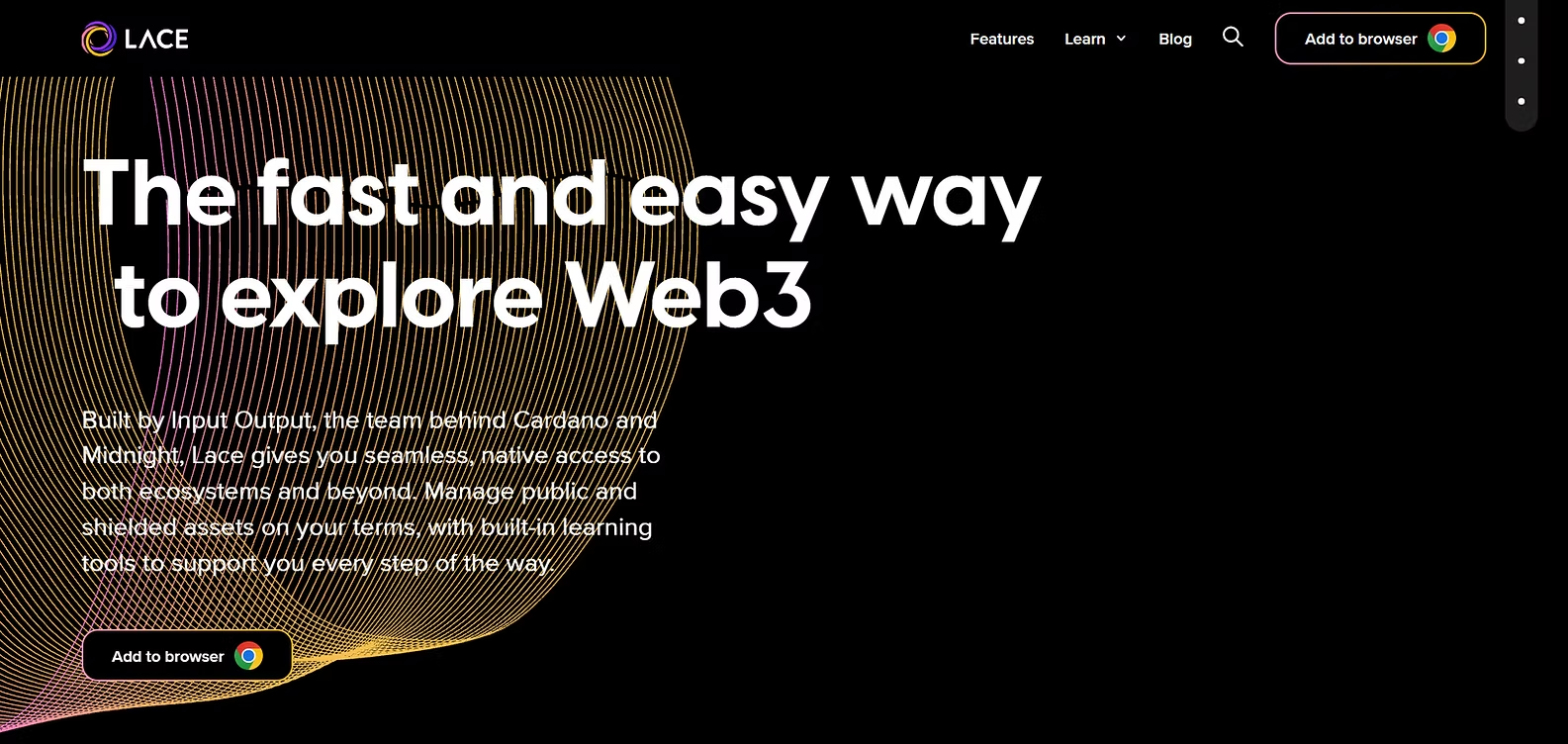
Lace 2.0 and subsequent updates have positioned the extension as a unified interface for multiple blockchain ecosystems. Users can manage Cardano native assets and stake pools alongside Bitcoin and Midnight assets without switching between disparate applications. A notable feature is the integration of Midnight, which introduces “selective disclosure.” This allows users to hold both unshielded tokens (where transactions are public) and shielded tokens (where balances and transaction details are protected by zero-knowledge technology) within the same wallet. For users prioritizing financial privacy, the ability to choose when to reveal transaction details represents a functional advantage over fully transparent ledgers.Security Architecture and Independent Audits
The security posture of a wallet extension is defined not only by its features but by its transparency and code hygiene. Lace maintains an open-source repository and has subjected its codebase to independent scrutiny. Three audits conducted by No Witness Labs across the browser extension and mobile app yielded 50 findings, all of which have been either remediated or explicitly accepted with documented rationale. Key technical improvements include the adoption of Argon2id for key derivation in new wallets (aligning with OWASP standards to resist brute-force attacks) and stricter memory hygiene that clears recovery phrases and passwords from memory immediately after use. Furthermore, API keys have been moved server-side to mitigate abuse risks, and password attempt limits with escalating lockouts have been implemented to thwart unauthorized access. The audit explicitly states that no accepted finding represents a reachable path to loss of funds, private keys, or recovery material.Hardware Wallet and Air-Gapped Management
For users holding significant value, the extension supports a spectrum of custody models beyond hot-wallet storage. The Lace 2.2 release introduced native support for Ledger and Trezor hardware wallets for both Cardano and Bitcoin, allowing users to sign transactions directly on the device while keeping private keys offline. More notably, Lace became the first major Cardano wallet to support SeedSigner, a fully open-source, DIY air-gapped signing device. This integration uses animated QR codes to transfer transaction data between the online wallet and the offline signer, eliminating USB or wireless connections that could be exploited. This approach caters to users who prefer verifiable, build-it-yourself security over commercial closed-source hardware.Best Practices for Secure Management
Managing assets within the Lace extension requires adherence to operational security fundamentals. Users should treat the extension as an interface, not a vault. Never input a recovery phrase into any pop-up, email link, or unsolicited prompt; the extension only requires the phrase during initial setup or restoration. Lace’s official guidance emphasizes that typing a hardware wallet’s recovery phrase into the software wallet breaks cold storage security by exposing the seed phrase to an internet-connected environment, and this applies to any software wallet, not just Lace. If a hardware wallet is not currently supported, users should not work around this by entering the recovery phrase elsewhere; instead, they should wait for official support updates. For dApp interactions, users should verify transaction details on their hardware device screen before signing, as malicious sites may attempt to manipulate wallet data or clipboard contents. Finally, because Lace is non-custodial, the responsibility for seed phrase confidentiality is absolute; the team will never ask for it, and any request to do so is a phishing attempt.Disclaimer
This content is provided for informational and educational purposes only and does not constitute financial, legal, or security advice. The Lace Wallet Extension is a self-custody tool; you are solely responsible for the secure management of your private keys and recovery phrase. Loss of your recovery phrase or private keys will result in the irreversible loss of access to your funds. No wallet provider, including Lace, can recover or reset your credentials. The cryptocurrency and DeFi markets are highly volatile and carry significant risk, including the total loss of capital. Features described, such as hardware wallet support and Midnight integration, are subject to network conditions, software updates, and third-party device compatibility. Always download the extension exclusively from the official website (lace.io); lookalike sites and phishing emails are active threats. Before making any transaction, verify all addresses and network fees on your hardware device screen if applicable. Do your own research and consult a qualified professional before making any financial decisions.